An Indian Diet Plan for Weight Loss doesn’t mean giving up your favorite Indian dishes. A well-planned Indian diet can help you manage your weight while keeping meals tasty, nutritious, and easy to prepare.
The key is to balance your meals and choose foods that provide essential nutrients like protein, fiber, vitamins, and minerals. Also, pay attention to portion sizes and try to limit fried foods as much as possible.
We Indians already have plenty of options for a balanced diet, including dal, roti, rice, curd, vegetables, eggs, and fish. All these foods can fit into a healthy weight-loss plan.
This guide will show you how to build a healthy Indian diet, choose better breakfast options, and follow a practical seven-day meal plan.
Why the Conventional Indian Plate Requires Adjustment
An average Indian dish consists of a big bowlful of rice/roti along with some dal and veggies and plenty of pickle/papad/fried snacks. This makes sure there’s plenty of carbohydrates (and carbs are your enemy). And yes, we have research backing this claim up!
In a study, the Indian Council of Medical Research did a massive survey on dietary intakes of adults from different parts of India and observed that our main nutrient comes as Carbs (about 62%) and Protein (only about 12%). So you can imagine what happens if one eats a meal based on these food items. Blood sugars shoots up and hunger strikes again quickly. We end up having more tea/biscuits/fried snacks — leading to increased calorie intake throughout the day.
Then come cooking practices. Almost all recipes involve adding large amounts of oil during tadka, frying or making gravies. Adding sugar to tea multiple times a day. Our festivals and gatherings include sweets, which may seem harmless but collectively contributes towards overall sugar and fat consumption.
Timing of eating – Most families have their dinner late and heavy, leaving no time for our bodies to utilize that energy till we go for bed.
This doesn’t mean Indian food isn’t healthy. You may well be having home cooked, balanced meals which are packed with fiber, but trying to shift the balance towards more veggies and proteins while reducing on refined grains, oil and sugar will be good.
Core Principles of an Indian Diet Plan for Weight Loss
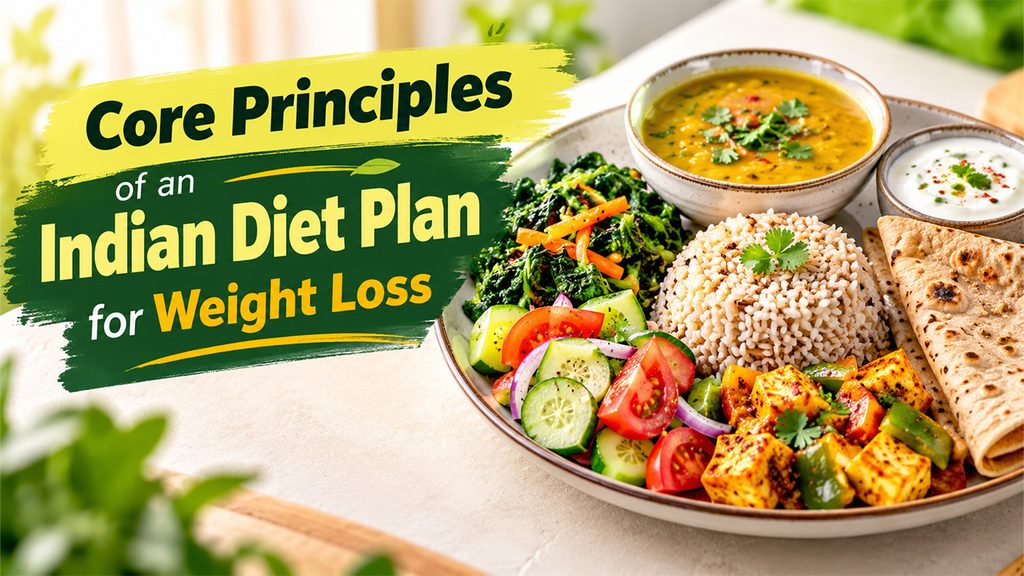
You should try sticking to these simple rules if they fit your lifestyle.
Fill Half Your Plate with Vegetables — Include a variety of veggies such as spinach, calabash, cabbage, beans, tomato, cucumber, etc., in your diet.
Include Some Proteins in All Meals –Dal, curd, paneer, eggs, fish, chicken, sprouts, soya, etc. are great sources of protein.
Stick to Whole Grains – Prefer brown rice, millet, oats, whole wheat rotis over white rice and refined flour as these contain a lot of fiber. Also try incorporating ragi, jowar, and bajra.
Keep a Check on Portions – Stick to 1 roti/small bowl of cooked rice per meal.
Reduce Oil Intake – Use spoons while cooking rather than using directly from the bottle. Try using 1 tsp of oil per person for every dish.
Minimize Sugar and Salt Usage – Drink tea without any added sugar. Avoid processed snacks & consume papad/pickle in limited quantities.
Eat Slowly – Eat slowly, chew thoroughly & don’t rush during meals.
Have Food at Fixed Times – Consume 3 main meals & 1-2 smaller snacks along with them every day. Dinner should be around 2 hours before bedtime.
Healthy Breakfast Ideas for Weight Loss
Here’s what makes our breakfast healthy – protein and fibre. You stay full till your lunchtime with these mixes.
Moong Dal Chilla: Grind soaked moong dal to a batter and cook on the pan. Add little oil. Stuffed with grated paneer or chopped veggies.
Vegetable Poha: Plain poha is nothing but carbs. So we just added some peas, carrots and peanuts. Serve along with curd.
Oats upma: Try oats upma (cooked using mustard seeds, onion, carrot and beans) for breakfast.
Pairing suggestion: Serve 2 idli along with sambar (which also contains dal and veggies).
Egg bhurji or boiled eggs: Try egg bhurji or boiled eggs for your morning meal. Remember to eat two eggs with a multigrain roti or one slice of whole wheat bread as well.
Ragi dosa: Ragi is a good source of fibre and calcium. Make your dosa thin and you don’t need much oil to cook them. You can also have it with some tomato chutney.
Vegetable Daliya: We can prepare daliya by taking broken wheat which will cook similar to porridge. You can add carrots, peas & beans here to get more fibres.
Curd with fruit and nuts: If you are thinking about having healthy breakfast but are short of time then this would be ideal option for you. Just take curd (preferably plain) and throw in some chopped fruits along with a few almonds.
Choose an item to make that you’ll want every morning ahead of time (like making batter/chopping veggies) the evening before.
A 7 Day Weight Loss Meal Plan
This indian diet plan for weight loss uses familiar Indian foods and includes both vegetarian and non-vegetarian choices. It is a starting point, so don’t take it as a fixed prescription.
| Day | Breakfast | Lunch | Dinner |
| Day 1 | Vegetable poha with plain curd | Whole wheat roti, moong dal, bhindi, and salad | Vegetable khichdi with extra vegetables and curd |
| Day 2 | Oats upma with peas and peanuts | Rajma, a suitable portion of rice, and cucumber salad | Grilled chicken or paneer with mixed vegetables and roti |
| Day 3 | Idli with vegetable-rich sambar | Chana, roti, and mixed vegetable sabzi | Dal, sautéed vegetables, and a suitable portion of rice |
| Day 4 | Besan chilla with curd | Chole, whole wheat roti, and salad | Egg bhurji or tofu bhurji, vegetables, and roti |
| Day 5 | Vegetable dalia with curd | Masoor dal, millet or whole wheat roti, and sabzi | Vegetable dosa with sambar |
| Day 6 | Vegetable omelette or moong dal chilla | Fish or tofu curry, rice, and cooked vegetables | Paneer or chicken tikka with salad and roti |
| Day 7 | Vegetable paratha with plain curd | Rice, dal, mixed vegetables, and salad | Roti with egg curry or mixed bean curry and vegetables |
Common Mistakes That Undermine Progress
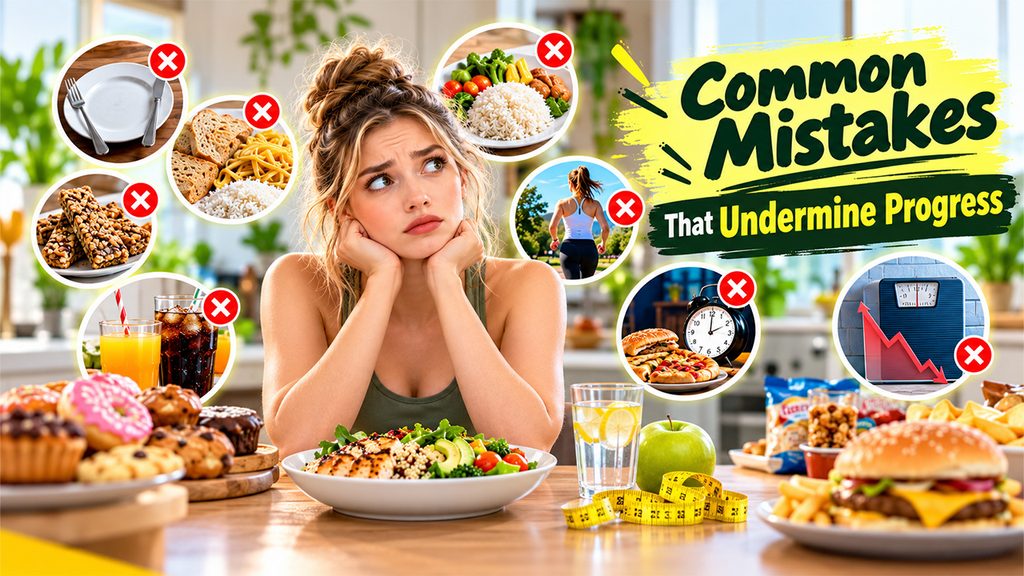
- Skipping meals – You’ll end up overeating at your next meal.
- Cutting all carbs – This will give you energy, but you won’t be able to stick to this diet long-term.
- Trusting packaged health food – Many types of granola bar, juice of fruits and baked snacks have high content of sugar and oil.
- Drinking Calories – If you take juice, sweet tea, or soft drinks will give you energy but won’t leave you feeling full.
- Eating Too Little Protein – If your meal consists of nothing else than Rice & vegetable, then you’ll be starving in few hours.
- Using exercise as a license to eat more – While your walk does burn some calories, chances are it doesn’t burn as many as you may think—so if you have an extra sweet on hand, you may be able to undo all of those steps at once.
- Eat dinner late at night – Eating large amounts of food right before going to bed means there won’t be much of a window for burning off energy.
- Unrealistic expectations about losing weight – Crash dieting may lead to short-term results, but these types of diets don’t promote sustainable lifestyle changes needed to maintain long term success.
Sustaining Results and Knowing When to Seek Professional Guidance
- Continue what works and discontinue anything that doesn’t.
- Weigh yourself once every week — always at the same time of day.
- Note how your clothing fits throughout the year.
- Walk everyday and try to incorporate 2-3 sessions for strength training per week.
- Prioritize sleeping well — since lack of good rest increases hunger.
- Count all of your little victories, whether it’s a looser waistband or increased levels of energy.
Before starting this program, talk with your doctor or diet expert if you have any underlying medical conditions, including:
- Diabetes, Thyroid Disease, Kidney Disease
- High Blood Pressure
- Pregnancy/Nursing
Talk with an expert if you haven’t achieved consistent results after several weeks or are feeling consistently run down, lightheaded or drowsy. Your expert will tailor a strategy appropriate to your unique requirements and condition.
Conclusion
When thinking of an Indian diet plan for weight loss, many think of eating different kinds of weird food but actually your day should include a well balanced plate and portion of all types of healthy foods.
Remember initially progress will be very slow and after some time it will get faster. Just start with making 1 changes that’s easy for you this week. Like try to make some vegetables on your every meals. Then gradually move towards further steps!
FAQs :
Can I lose weight and still eat roti and rice?
Yes, keep to one roti or one small bowl of rice per meal; add dal and vegetables too.
Can I follow this plan without meat or fish?
Yes, use paneer, tofu, or soya chunks in place of fish and chicken.
Do I need to exercise with this plan?
Yes, walk daily and do some exercises two or three times a week.
Can I drink tea on this plan?
Yes, take it with little or no sugar.
When should I see a doctor before starting?
Talk to a doctor first if you have diabetes, thyroid disease, kidney disease, high blood pressure, or are pregnant.