Let us understand why your body needs a balanced diet with the help of an analogy. Just image there is a soccer team that only has strikers. There is no goalkeeper, no winger, no midfielder, and no defender. It can look exciting for the team but as the game goes on, reality kicks in. Total chaos and an inevitable defeat.
The mechanism of your body works the same way. To function at a high level, it requires midfielders, defenders, goalkeepers, and a few strikers too. Every component of your body needs different nutrients. Deficits in these nutrients can make these components incapable of performing their role well. And, nowhere in the universe will you find an item that can cover all the nutrients. That’s the whole idea behind a “balanced diet.”
Demystifying “Balanced Diet”
When people hear the term “balanced diet,” they think about a bunch of rules. No rice at night. Tiny portions of everything. Sugarless Tea. This isn’t what a balanced diet really is.
A balanced diet is about mixing different foods and eating them in the right amounts, so your body gets what it needs to grow, heal, and fight off illness. You don’t have to avoid anything, and your meals definitely don’t have to be perfect. What matters most is the routine you build over days and weeks. Consistency makes the difference, not a single meal.
Variety and proportion sit at the heart of a balanced diet. Do not treat it like a chore. A slice of cake won’t ruin your progress, so stop worrying about small slip-ups. Stick with balanced eating for a month and you’ll notice real changes: more energy, fewer cravings, and no mid-afternoon crashes. It’s surprisingly simple, and your body thank you for it.
Meet the Players: What Are the Essential Nutrients?
Your body utilizes a handful of key nutrients on a daily basis. There are a few nutrients it needs in small amounts but still cannot function without them. And there are some nutrients that it needs in large amounts. Let us see briefly take a look at all these nutrients:
| Nutrient | What it does for you | Where you’ll find it |
| Carbohydrates | Main fuel for your brain and muscles | Whole grains, fruits, potatoes, beans |
| Protein | Builds and repairs muscles, skin, and other tissues | Eggs, fish, chicken, lentils, tofu, dairy |
| Fats | Store energy, protect organs, help absorb some vitamins | Nuts, seeds, olive oil, fish, avocado |
| Vitamins | Support immunity, eyesight, bones, and energy release | Fruits, vegetables, dairy, whole grains |
| Minerals | Build strong bones, carry oxygen in the blood, keep nerves and muscles working | Leafy greens, dairy, nuts, beans, meat |
| Fiber | Keeps digestion smooth and helps you feel full | Vegetables, whole grains, fruits, legumes |
| Water | Moves nutrients around, keeps your temperature steady | Water, milk, soups, fruits |
There’s nothing you truly need to avoid outright when it comes to food, not even fats. Your body needs them, but the kind you eat matters a lot. Fats from seeds, nuts, plant oils, and fish actually support your health and fit right into a daily diet. On the other hand, fats from deep-fried foods don’t do your body any favors. Once your meals get more balanced, you’ll probably stop wanting them anyway.
Your body is pretty good at sending signals when something is missing. If you’re low on iron, you might feel tired. If you don’t get enough fiber, your digestion slows down. If your body doesn’t get enough water, you lose focus and get constant headaches.
Can’t Remember Every Nutrient? Enter Food Groups
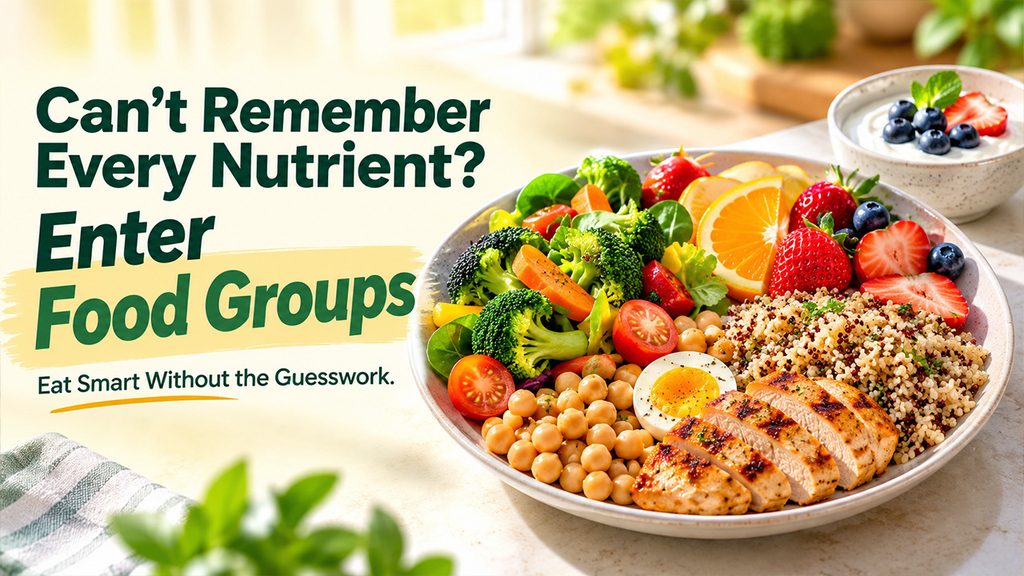
You don’t need to obsess over every single nutrient to eat well. Thinking about them in terms of food groups makes it much easier. Most nutritionists break things down into five main categories, and each one brings something important to the table.
- Fruits offer fiber, vitamins, and natural sweetness whether they are fresh, frozen, or dried; everything counts.
- Vegetables fill you up with minerals, vitamins, and fiber. Aim for variety, since different colors mean you’re getting different nutrients.
- Grains are your primary source of carbs. Whole grains like brown rice, oats, and whole wheat give you more fiber than processed choices like white bread.
- Protein foods build muscle and help your body repair itself: meat, fish, beans, eggs, nuts, lentils, and seeds all do the job.
- Dairy or dairy alternatives like curd, milk, cheese, or fortified plant milks provide calcium for strong bones and teeth.
The idea is pretty straightforward. If your plate includes something from each group, you’re giving your body what it needs. Not sure how much? Fill half your plate with fruits and vegetables, then split the rest between protein and grains. That’s a good place to start.
Here Is Where You Can Go Wrong
Most people don’t make poor food habits on purpose. Life happens and they get busy with their jobs, families, and daily responsibilities and healthy eating becomes harder. Over time, a few common gaps start to appear:
- Skipping vegetables: When the day gets busy, it’s easy to skip vegetables altogether and order takeouts, which usually doesn’t have any vegetables in it.
- Choosing refined over whole: When you’re running late for work, white bread and sugary cereals become quick options, but they usually contain less fiber than whole-grain alternatives.
- Too many snacks, too little protein: Chips and biscuits fill you up for a short while, but without enough protein you might feel hungry again.
- Forgetting water: Many people forget to drink water throughout the day and confuse thirst with hunger and reach for food when a glass of water works just fine.
- Eating the same three meals on repeat: Repeating the same meal every day feels easier, but it also means that you’re missing out on different nutrients every week, which comes from eating a wider variety of food.
Obviously, none of these are crimes. However, they are just bad eating habits and one thing about habits is that they can be changed with one small step at a time.
A Balanced Diet Chart You Can Actually Use
Here’s a simple Balanced Diet Chart for one day. Instead of seeing it as a rulebook, treat it as an example. Swap foods in and out based on what you like, what’s available, and any dietary needs you have.
| Meal | Sample foods | Food groups covered |
| Breakfast | Oats cooked in milk, topped with banana and a handful of nuts | Grains, dairy, fruit, protein |
| Mid-morning | An apple and a glass of water | Fruit |
| Lunch | Whole wheat roti or brown rice, lentils, a vegetable dish, and a bowl of salad | Grains, protein, vegetables |
| Evening snack | Roasted chickpeas or a small bowl of yogurt | Protein, dairy |
| Dinner | Grilled fish, paneer, or tofu with sautéed vegetables and a small portion of rice | Protein, vegetables, grains |
| Throughout the day | Water, plus milk or buttermilk if you like | Water, dairy |
You can see for yourself how much ground it covers. Every food group shows up at least one, and the good thing is that none of the meals are complicated. Try following this chart for one week and notice the difference in your eating routine.
Building Your Own Healthy Diet Plan

A diet plan doesn’t have to be complicated or expensive. It should fit your daily routine, food preferences, and lifestyle. The core idea is to make better food choices without having to give up your comfort food or make things harder than it needs to be. Here’s how you can get started:
- Look at what you already eat: Before you change your diet, give yourself three days to note everything you eat and drink throughout the day. This will make you see food groups that you are missing.
- Fix one gap at a time: You don’t have to change your entire diet overnight, and frankly speaking it’s not even possible. However, if you don’t eat vegetables regularly, start by adding at least one serving to your lunch or dinner. Once that becomes a part of the eating routine, work on another diet.
- Build meals around the plate rule: Try to fill half of your plate with fruits and vegetables, one-quarter with whole grains, and the remaining quarter with protein-rich foods, such as eggs, beans, lentils, paneer, fish, or chicken. You can also include dairy products like milk, curd, or yogurt if they suit your diet.
- Swap, don’t remove: You don’t need to stop eating all your favorite foods to eat well. Try whole wheat bread instead of white bread. Choose fruits when you want a sweet snack. And replace sugary drinks with water or unsweetened buttermilk. Small swaps add up without feeling like a sacrifice.
- Plan a few meals ahead: You don’t need to prepare every meal in advance. Start by deciding what you’ll have for three dinners during the week. Keep a few basic ingredients ready, such as vegetables, lentils, or eggs, so you have options when you’re short on time. This saves you from making last-minute unhealthy choices.
- Drink water regularly: It’s easy to forget about water when you’re working, traveling, or managing household tasks. Keep a bottle nearby and sip through the day instead of waiting until you’re thirsty.
- Leave room for treats. Eating healthy doesn’t mean giving up your favorite snacks, sweets, or desserts forever. You can enjoy these foods as part of an overall balanced diet.
Conclusion
Healthy eating isn’t about following strict rules or chasing perfection. It’s really just about eating a variety of foods, keeping your portions reasonable, and having a little plan. You’re going to miss the mark sometimes, and that’s absolutely okay. No need to beat yourself up. If your plate has some fruit, leafy greens, grains, protein, and dairy, you’re hitting all the essentials without much hassle. Wondering how to make it a habit? A simple chart and a few smart swaps can do the trick. Tackle the easiest gap first, then keep building from there. After a few days, eating balanced meals stops feeling like something you have to work at; it just becomes what you do.