
Strength training becomes more effective when you follow a plan and give your body time to adapt. Progressive overload for beginners means gradually making an exercise more challenging as your strength improves. The goal is steady progress, not exhaustion or competition with other people. Progressive overload for beginners should feel manageable.
What Is Progressive Overload?
Progressive overload is the gradual increase of training demand over time. During progressive overload training, muscles and the nervous system adapt to repeated challenges. When your current workload feels manageable and your technique remains consistent, a small increase can provide a new stimulus.
A beginner strength training routine should practice basic patterns: squatting, hinging, pushing, pulling, and bracing your core. This approach makes progressive overload for beginners more predictable and easier to track.
Why Gradual Progress Matters
Adding weight, sets, repetitions, and workout days together can create excessive fatigue and make it harder to identify what is working.
If your form changes or soreness interferes with daily movement, repeat your current workload or allow more recovery. Progressive overload for beginners should fit your ability, schedule, and recovery. Progressive overload for beginners rewards consistency.
How to Apply Overload Safely
Choose a load that leaves about two or three good repetitions in reserve. Do not increase resistance just because a calendar says it is time. Progressive overload for beginners depends on readiness. A simple log also helps you notice patterns, avoid guessing, and choose sensible increases based on repeated performance rather than motivation alone.
Use these progressive overload techniques one at a time:
- Add repetitions: Move from two sets of eight squats toward nine or ten.
- Add resistance: When repetitions feel controlled, use the next small dumbbell or band increment.
- Add a set: Progress from two sets to three when recovery is consistently good.
- Improve control: Use a comfortable range of motion and lower the weight smoothly.
- Adjust rest: Allow enough time to repeat good technique on the next set.
These options explain how to increase workout intensity without making every session a maximum-effort test. Progressive overload for beginners should remain controlled, repeatable, and realistic.
Progressive Overload Exercises for Beginners
Choose four or five progressive overload exercises for beginners for a full-body session.
Squat
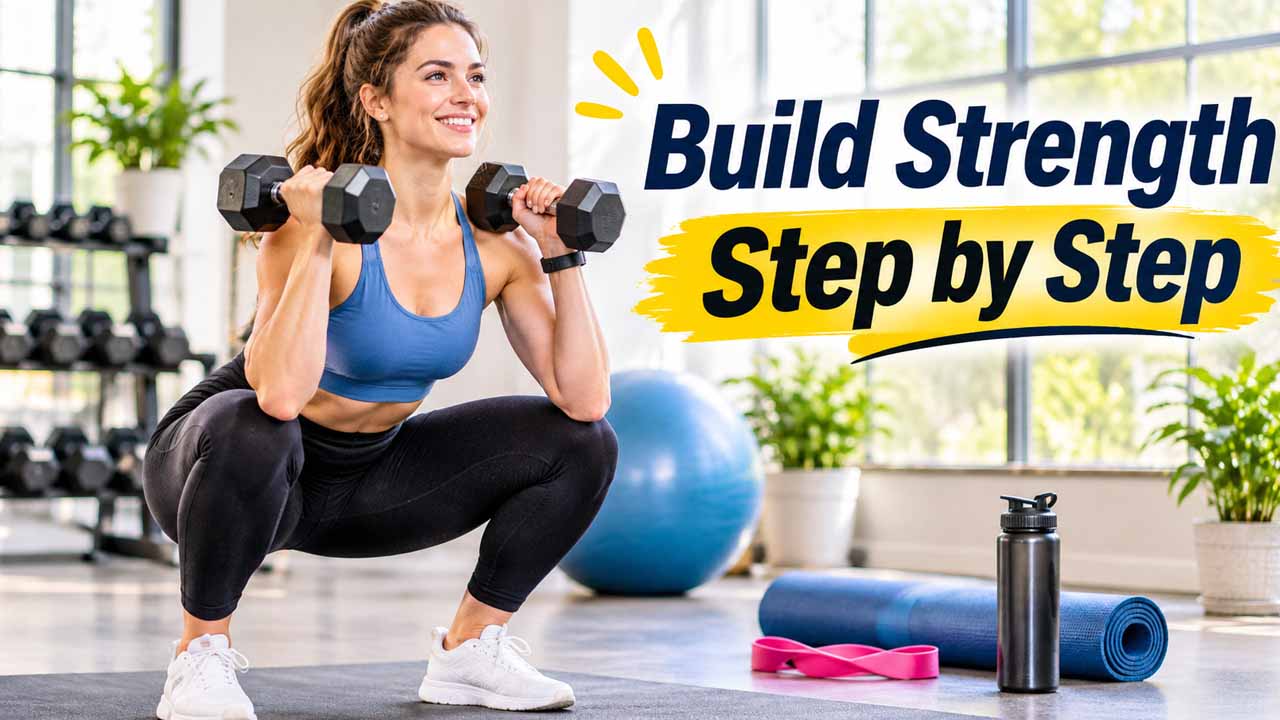
Start with a chair squat or bodyweight squat. Keep your feet steady, move your hips back, and lower only as far as you can control. Progress by adding repetitions, then hold a light dumbbell at chest level when ready.
Push
Try wall push-ups, then incline push-ups against a stable bench. Keep your body aligned and avoid letting your hips sag. Lower the incline gradually as strength and control improve.
Hinge and Pull
Practice a hip hinge by pushing your hips back while keeping your spine steady. Later, try a light dumbbell Romanian deadlift. For pulling, use a resistance-band row or a cable row. Draw your elbows back without shrugging your shoulders.
Core
Begin with a dead bug or a short plank. Add a few seconds only when you can breathe normally and keep your trunk steady.
For more beginner movement ideas and weekly scheduling, read LifeFitZone’s workout routine for beginners.
Build a Simple Weekly Workout Plan
A progressive overload workout plan can begin with two or three nonconsecutive strength sessions each week. At each session, perform two sets of eight to twelve repetitions of squats, incline push-ups, rows, and glute bridges. Add a dead bug hold or plank for 15 to 20 seconds. Choose resistance that makes the final repetitions challenging while keeping your form steady.
When you complete the top of your repetition range with good form for two sessions, add a little resistance or one repetition, not both. Leave a recovery day between sessions for the same muscle groups. Walking and gentle mobility work can fit between strength days.
If you prefer exercising at home, LifeFitZone’s four-week home workout plan offers a simple schedule and bodyweight movement ideas.
Nutrition and Recovery Support Strength

Training is only one part of getting stronger. Progressive overload for beginners also depends on adequate food, hydration, and recovery. Include protein across meals, drink fluids regularly, and aim for consistent sleep. Try Greek yogurt with oats and berries at breakfast; lentil and quinoa bowls with vegetables at lunch; tofu or tempeh with brown rice at dinner; and edamame, cottage cheese, nuts, or seeds for snacks.
Beans, lentils, peas, soy foods, dairy, nuts, seeds, and quinoa provide protein in varying amounts. Essential amino acids are those the body cannot make in sufficient amounts and must obtain from food. Complementary proteins, such as beans with rice or hummus with whole-grain pita, combine different amino acid profiles. They do not need to be paired at every meal; eating a variety of protein sources throughout the day can help meet needs.
For practical meal-building ideas, explore LifeFitZone’s healthy eating for beginners.
Stop for sharp, worsening pain or swelling and seek medical guidance.
Common Mistakes to Avoid
Avoid comparing your weights with someone else’s. Their training history, body size, and goals may be different. Do not test maximum lifts before learning technique, skip warm-ups, or change your program every week. If performance drops repeatedly, review sleep, food, stress, and recovery before adding more work.
LifeFitZone’s guide to what a balanced diet includes explains how different food groups contribute to everyday nutrition.
Frequently Asked Questions
How often should beginners increase weight?
Increase weight only when you can complete your planned repetitions with stable technique across multiple sessions. Use small increments and keep the same range of motion.
Can I build strength without gym equipment?
Yes. Squats, wall or incline push-ups, glute bridges, planks, and resistance-band rows can challenge major muscle groups. Make movements harder gradually as control improves
How many days should I strength train?
Adjust based on experience, schedule, and recovery.
Should I work out when I am sore?
Gentle activity may feel comfortable with mild soreness, but avoid hard training if soreness changes your movement. Stop for sharp or worsening pain and seek professional advice when needed.
What if my progress stalls?
Review your training log, technique, sleep, nutrition, and stress. Repeat the workload or reduce fatigue before increasing again. Consistency is more useful than forcing progress every week. Progressive overload for beginners works through small, repeatable steps.