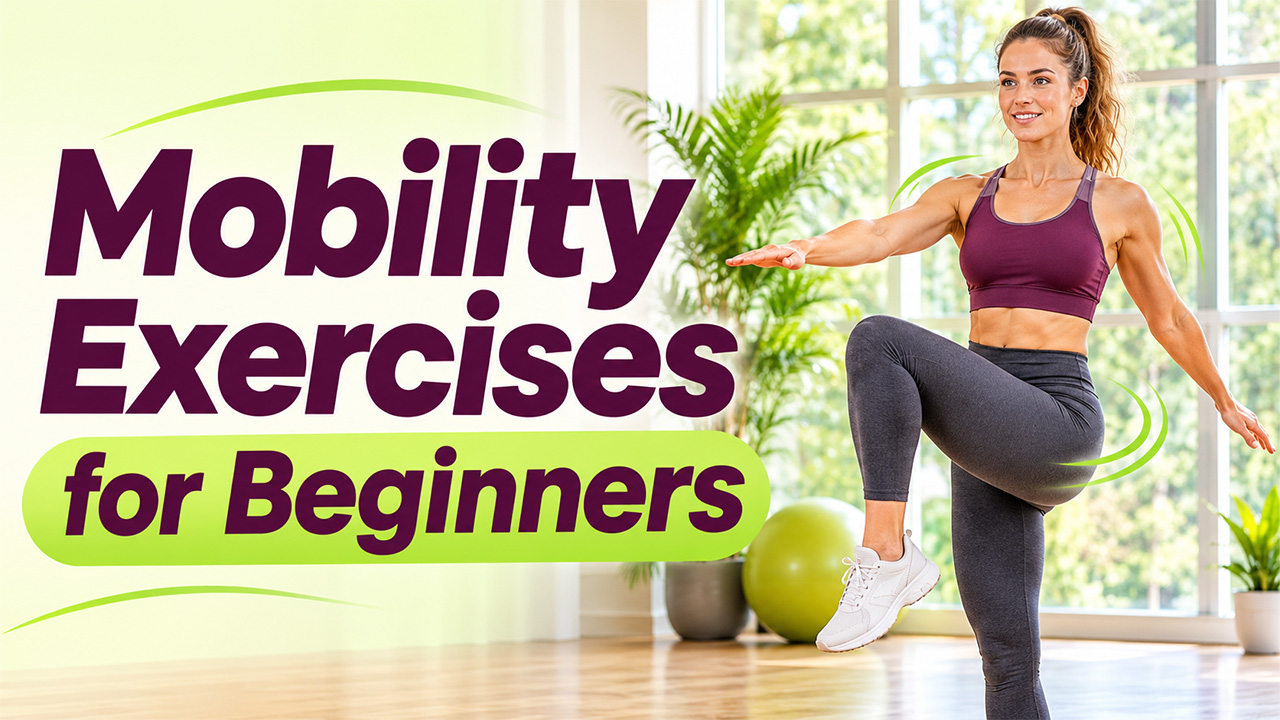

Moving comfortably makes everyday life easier, from reaching a shelf to rising from a chair. Mobility is the ability to move a joint through its available range with control. It combines flexibility, strength, coordination, and balance. Unlike holding a stretch, mobility practice asks muscles to guide movement. Mobility exercises for beginners build confidence and prepare you for everyday activities without complicated equipment.
Why Mobility Matters
Mobility exercises for beginners build posture awareness, balance, and control for daily tasks such as reaching, turning, stepping, and getting up from a chair. Mobility exercises for beginners should feel approachable, not like a flexibility test.
Sitting for long periods and repetitive tasks can leave areas feeling stiff. Gentle movement gives joints chances to bend, rotate, and extend. A beginner mobility workout can support warm-ups and complement strength training. It is not a cure for pain or a replacement for medical care.
Flexibility describes how far a muscle can lengthen; mobility describes how well you control joint movement. Flexibility and mobility exercises work together, while strength training helps you control each position.
Start Safely Before You Move
Mobility exercises for beginners should start in a small, comfortable range. Breathe normally, move gradually, and never force one side to match the other.
Clear a floor space and keep a stable chair or wall nearby. Warm up with three to five minutes of walking or marching. Move slowly, breathe normally, and stay comfortable. Stop for sharp pain, numbness, dizziness, or worsening symptoms. Pause between movements when needed, choosing a pace that lets you maintain balance, breathe comfortably, and focus on technique.
If you have an injury, recent surgery, balance concerns, or a condition affecting exercise, ask a healthcare professional which movements are appropriate. Never force a joint.
Six Full-Body Movements to Practice
Mobility exercises for beginners work best at a slow pace. Rest as needed, start with a few accessible movements, and add others as confidence grows.
These full body mobility exercises need little space. Start with five to eight controlled repetitions, or about 20 seconds per side.
1. Shoulder Circles
Sit or stand tall. Lift shoulders toward your ears, roll them back, and lower them. Repeat in reverse. Keep your neck relaxed and use comfortable circles.
2. Cat-Cow
On hands and knees, place wrists below shoulders and knees below hips. Inhale, lift your chest gently; exhale, round your back. Move smoothly. If kneeling hurts, try a seated version with hands on thighs.
3. Standing Hip Circles
Hold a sturdy chair. Lift one knee slightly and draw a small circle, keeping your torso steady. Change direction, then switch legs. Control matters more than circle size.
4. Supported Ankle Rocks
Face a wall, hands supported. Step one foot forward and bend that knee toward the wall while keeping the heel down. Rock gently, then switch. These joint mobility exercises rehearse ankle motion used for walking and stairs.
5. Seated Torso Rotations
Sit with feet flat. Cross arms over your chest and turn your rib cage gently, keeping hips forward. Return to center and switch sides. Never twist through pain.
6. Supported Hip Hinge
Mobility exercises for beginners can include familiar patterns linking hips, knees, and spine. Practice near a wall if you need extra balance support.
Stand hip-width apart, hands on thighs. Soften knees, push hips back, and lean forward slightly. Return upright. This rehearses a useful everyday movement.
Build a Simple Daily Routine

Mobility exercises for beginners can be split into short breaks: shoulder circles in the morning, ankle rocks before a walk, and hip circles after sitting.
A daily mobility routine for beginners can take eight minutes: march one minute, circle shoulders one minute, practice Cat-Cow one minute, circle hips two minutes, rock ankles two minutes, then rotate your torso and hinge your hips. Adjust as needed.
Practice three or four days weekly, then add a shorter daily version if comfortable. Consistency matters more than intensity. Notice gradual changes without forcing a deeper stretch. Use a comfortable pace, and leave room for recovery between demanding workouts.
For a broader beginner fitness schedule, see LifeFitZone’s weekly workout routine for beginners. If you prefer guided floor-based movement, its beginner yoga routine at home offers another gentle way to practice controlled positions.
Make Movement Fit Your Day
Mobility exercises for beginners complement walking, cycling, swimming, and strength training, but do not replace aerobic activity or resistance exercise.
You can do mobility exercises at home in a living room or beside your desk. During sitting breaks, try shoulder rolls, calf raises, torso turns, or a short walk. LifeFitZone shares more exercises to try during work breaks.
As control improves, increase repetitions or range, changing one factor at a time. For a structured plan, explore LifeFitZone’s four-week home workout for beginners.
Support Activity With Balanced Meals
Drink water, especially in hot weather. Frozen vegetables, canned beans, plain yogurt, and whole grains make practical, affordable meal staples.
Movement is one part of wellbeing. Build meals around vegetables, fruit, whole grains, and protein. Vegetarian options include beans, lentils, tofu, tempeh, edamame, quinoa, Greek yogurt, cottage cheese, nuts, and seeds. Try Greek yogurt, berries, oats, and chia for breakfast; a quinoa, black bean, vegetable bowl for lunch; lentil curry, brown rice, and greens for dinner; and cottage cheese or hummus with vegetables for snacks.
Indian options include dal and rice, rajma with whole-wheat roti, or tofu bhurji. Complementary proteins, such as beans and grains, supply a broad range of amino acids across the day. The body needs nine essential amino acids; soy and quinoa provide all nine. Varied plant foods complement one another, and combinations need not happen at every meal. See LifeFitZone’s balanced diet guide.
Common Beginner Mistakes
Mobility exercises for beginners are not a competition. Your comfortable range may differ from someone else’s; focus on smooth motion and steady balance.
Avoid bouncing, rushing, holding your breath, or copying another person’s range. More is not always better. Reduce a movement’s range or use a chair for support. Rest when unusually tired.
Frequently Asked Questions
How often should beginners practice mobility?
Start with three or four short sessions weekly. Gentle daily movement is also reasonable if comfortable.
Can mobility work improve flexibility?
It can support active range of motion and complement stretching. Results vary with anatomy and consistency.
Do I need equipment?
No. Use body weight, floor space, and a chair or wall for support.
Should mobility exercises hurt?
No. Mild effort is fine; stop for sharp pain and seek advice if discomfort persists.
Can I do mobility work before strength training?
Yes. Gentle dynamic movements prepare you to exercise; follow with an activity-specific warm-up.