
If you’re trying out yoga for the first time, there’s no shortage of options! There are many types of yoga, ranging from Iyengar to Ashtanga to Vinyasa — all different in their own way.
Two types stand out among the rest as being especially popular today. These are Hatha Yoga and Power Yoga, both of which include physical poses and focus on steady breathing techniques. However, despite these commonalities, there are significant differences between the two that could impact how well either works for you.
This post about Hatha yoga vs. Power yoga explains each style in plain terms and compares them side by side.
What Is Hatha Yoga?
Hatha yoga is a general category of yoga practices that focus on physical postures (asanas) as well as controlling your breathing pattern. The word “hatha” is derived from two Sanskrit words, “ha” which signifies sun and “tha,” representing moon.
The goal is to achieve harmony between these opposites and balance within oneself by mastering one’s own emotions. Hatha yoga dates back to centuries ago, when it started in India and has since taken over the world, spreading out all corners. Today, this style of yoga can be found in almost every yoga class around us and typically refers to slow yoga that is easy to follow along. You’ll get plenty of chances during class to rest while holding different postures such as mountain, cobra, child’s pose, downward dog, etc.
Hatha yoga builds balance, body awareness, and a steady range of motion. It also builds some strength, mostly in the legs, core, and back. Many people find that it calms the mind and eases tight muscles (but research is limited on this topic).
On average, sessions last anywhere from 30 minutes up to an hour. Your teacher will provide instruction throughout each pose, explaining what they’re doing so that students may adjust their positions accordingly. This is for someone who wants a slower pace – perfect if you’re a beginner, an older adult, or just returning to yoga after a while.
What Is Power Yoga?
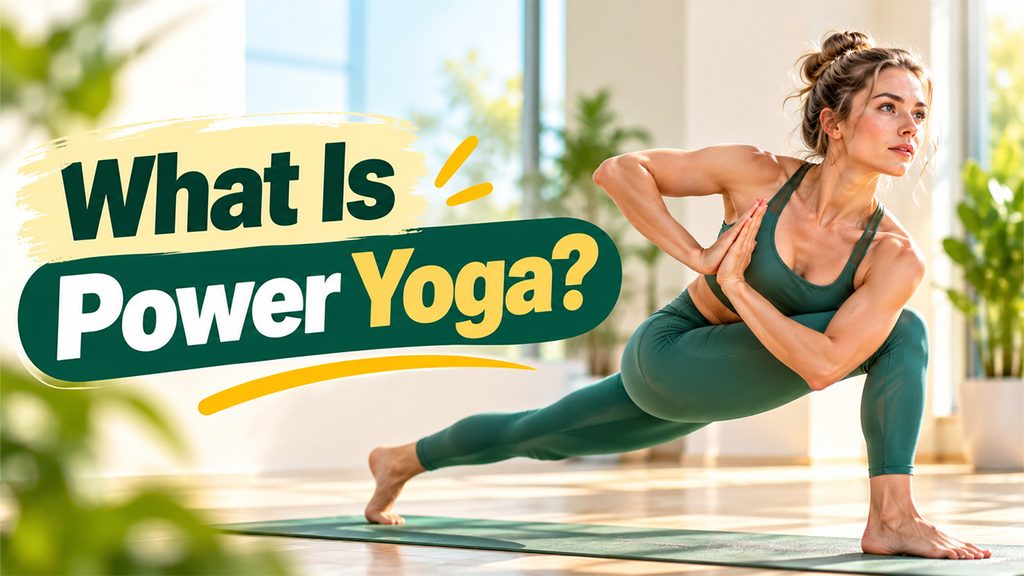
This dynamic, fast-paced form of yoga stems from Ashtanga but really came into popularity in the U.S. during the ’90s as power yoga. The goal is for every class to be a complete workout—moves will seamlessly flow one after another without much time to rest. You can count on a strong series of planks, lunges, push-ups and long holds in Warrior positions. Power yoga’s emphasis is on strength, stamina and elevating your heart rate—all of which means you’ll probably break a sweat and leave exhausted from working your arms, legs and core muscles.
While some yoga studios choose to turn the room into an extra hot environment (not all do), most offer a class that runs about an hour long and plays upbeat music to keep energy high. Power yoga does include some breathwork and ends with a cool down, but overall, these classes have pretty different names based on each individual studio’s approach—think Vinyasa, Flow or otherwise.
Power yoga increases muscular strength and endurance – primarily for the arms, shoulders, and core muscles. Power yoga classes also increase heart rate more than slower classes.
Students typically leave power yoga sessions feeling tired but invigorated by their workout. The quick pace of the session keeps your mind engaged with physical activity rather than long periods of stillness.
Power yoga may be a good fit for you if you prefer an active class that challenges you physically. When comparing hatha yoga vs power yoga, this class type can be difficult for beginners.
Key Differences Between Hatha and Power Yoga
Hatha and Power yoga share a lot of poses. In hatha yoga vs power yoga, what changes is how long you stay in them and how hard you work.
Pace –
Hatha is pretty slow, in a Hatha class you move into a pose, stop, breathe, and then move on, with no rush. Power yoga hardly stops at all. You flow from plank to chaturanga to upward dog to downward dog, and by the fifth round your heart is pounding. Hatha asks for the kind of effort most people can keep up for an hour. Power yoga doesn’t.
Goals –
Hatha yoga is fairly calm, balanced, and easy to perform for most people. Power yoga is more about building strength, stamina, and muscles.
Focus –
Hatha classes are more about focusing on something and calming down your whole body and mind but on the other hand Power classes are actually about muscle building.
Body load –
Hatha stretches tight muscles and takes the joints through a gentle range. Power makes the muscles work hard for much longer. Either one can strain you, but in Power yoga the wrists, shoulders, and lower back take the punishment, mostly from all the planks and push-ups.
After class –
Most people leave a Hatha class loose and relaxed. But after a Power class, you’re warm and tired, and the next morning your arms may let you know about it.
Setting & gear –
A Hatha room is usually quiet, with soft light and hardly any music. Power classes often have upbeat music. You only need a mat for either, though Hatha classes tend to hand out blocks and straps too.
If you’ve never done yoga, start with Hatha. Power yoga is easier once you have some strength and fitness.
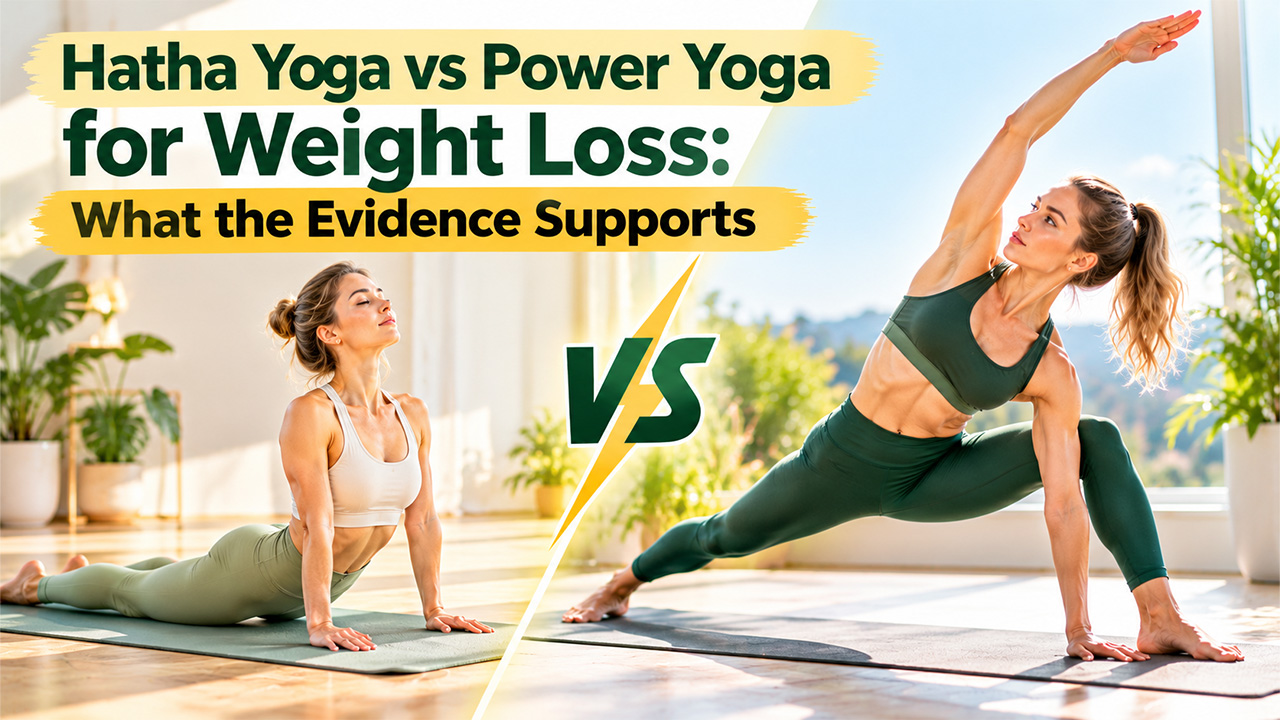
Hatha Yoga vs Power Yoga for Weight Loss: What the Evidence Support
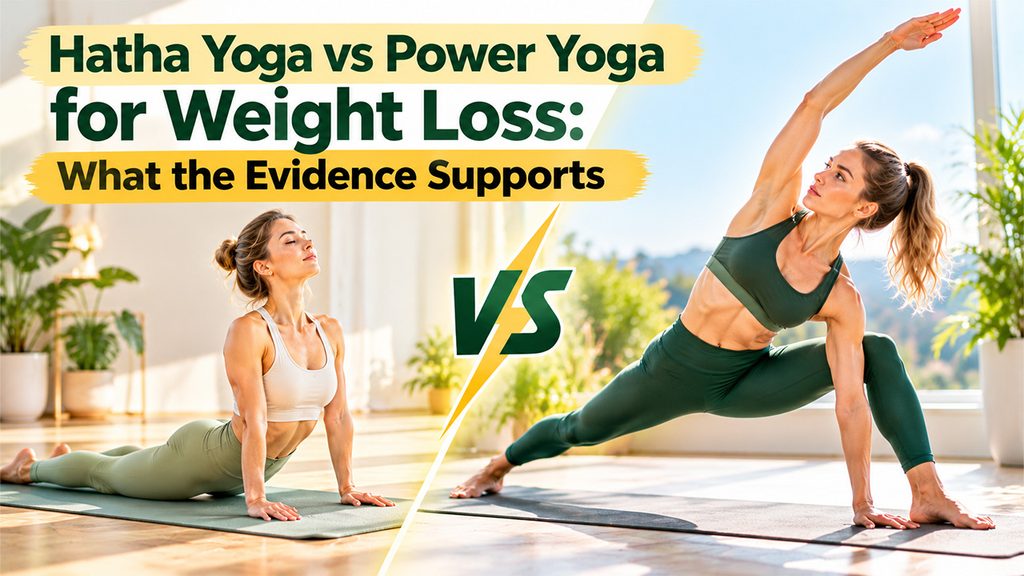
Does power yoga help in losing weight? Yes, power yoga can help you lose weight, but thee are other things that play major roles too. To shed pounds from our bodies, we must ensure that the energy burned is higher than what we consume. And exercise is an important factor in burning up those extra kilos.
According to Harvard Health Publishing, a list of activities, including stretching and Hatha Yoga does burn a good number of calories.
Considering Power yoga involves fast-paced workouts, the intensity level increases further. Thus, this form of yoga definitely burns more calories than Hatha yoga.
Moreover, food choices make the biggest impact on your ability to drop those unwanted kilograms from your weight, and then there are factors like restful sleep, and even a walk around the neighborhood. In addition to everything else mentioned above, power yoga improves muscular strength, making the everyday tasks and exercising much easier.
Hatha yoga doesn’t offer significant calorie burning benefits like Power yoga does, Hatha may assist with stress management practices that can influence eating patterns. It’s important to mix different types of exercises throughout each week- for example, dedicating certain days solely to practicing Power yoga, followed by walks or using weights on alternate days ensures overall fitness balance without overexerting yourself daily. Including periods of complete rest enables muscle growth as they recuperate post-exercise sessions.
Ultimately, though, if you genuinely love participating in power yoga, don’t hesitate to join these classes regularly since consistency equals success! Additionally, if suffering from any underlying medical conditions please consult with a doctor prior to initiating novel fitness regimen plans!
Conclusion
Hatha yoga vs power yoga, there is quite some overlap between these two styles — both use similar poses and focus on breathing. But they serve different needs. Hatha yoga is slow and calm, and it’s mostly for beginners, Power yoga on the other is pretty fast and demanding, and it builds strength and stamina.
Both styles are worth learning, and many people enjoy each one at different times. Pick the class that fits your body and your goals.
FAQs :
What is the main difference between Hatha Yoga and Power Yoga?
Hatha Yoga is slow and gentle, but Power Yoga is fast-paced and strength-focused.
Hatha yoga vs power yoga, which is better for beginners?
Hatha Yoga is better for beginners because of its slower pace.
Which one helps with weight loss?
Power Yoga burns more calories thanks to its faster, more intense flow.
Can I practice both Hatha and Power Yoga?
Yes, many people combine them.
How often should I practice yoga?
Three to five sessions a week is ideal for most people.